


Industrial chemistry relies on a balance between speed, cost, and quality. Manufacturers face pressure to optimize production cycles while adhering strictly to regulatory standards. Catalysts drive profitability and sustainability in this high-stakes environment. These substances alter the kinetics of chemical reactions without suffering permanent chemical change themselves, allowing producers to achieve results that would otherwise be thermodynamically sluggish or economically unviable.
Selecting the right catalytic system determines whether a project meets its yield targets. It dictates the energy consumption of a reactor and the purity of the final distillate. Below, we will explore the mechanisms at play, the economic impact on large-scale production, and how catalysts enhance chemical reaction efficiency in complex industrial applications involving resins and acids.
The Kinetics of Reaction Barriers
Every chemical transformation faces an energetic hurdle known as activation energy. Molecules must collide with sufficient force and in the correct orientation to break existing bonds and form new ones. Without intervention, many desirable reactions require excessive heat or pressure to proceed at a commercially relevant rate. These harsh conditions often result in equipment degradation, higher utility costs, and safety risks.
Catalysts are an alternative pathway for the reaction. A catalyst lowers the activation energy required for the transition state by forming intermediate complexes with the reactants. This allows a larger fraction of molecular collisions to result in a successful reaction at lower temperatures. This thermodynamic advantage offers operational flexibility for custom chemical producers. Reactors can run at safer, lower pressures while maintaining or even exceeding throughput rates.
The Mechanisms of Surface and Molecular Interaction
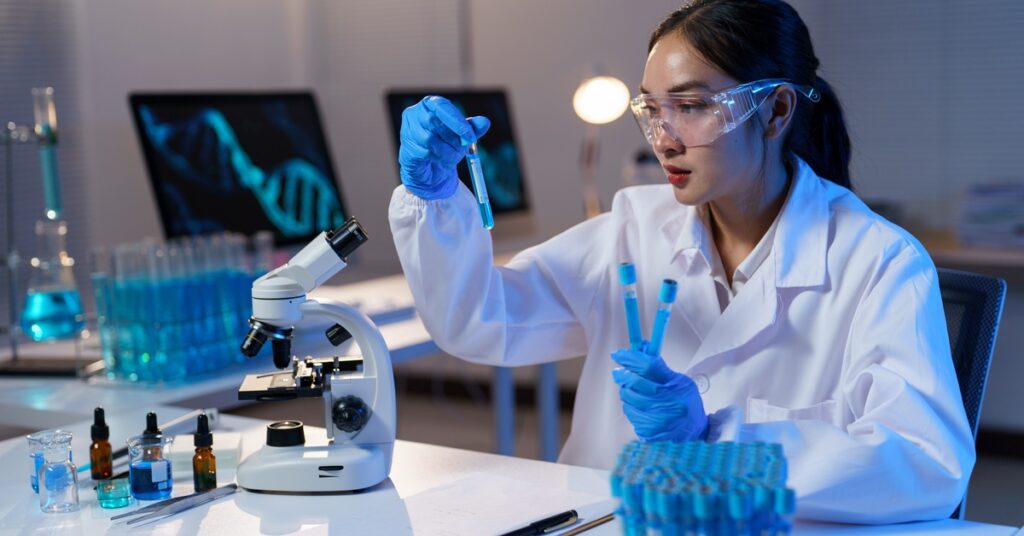
The action of a catalyst depends on whether it operates in the same phase as the reactants (homogeneous) or a different phase (heterogeneous). Chemists often utilize homogeneous acid or base catalysts to drive polymerization in resin production.
Homogeneous Catalysis in Resin Synthesis
In liquid-phase reactions, such as esterification or condensation polymerization, the catalyst disperses uniformly throughout the reaction mixture. This maximizes the contact surface area between the catalyst and the reactants. Proton donors (acids) or proton acceptors (bases) interact directly with functional groups on the monomer molecules.
For example, a strong acid catalyst facilitates the electrophilic attack on the phenol ring in the production of phenolic resins. This precise interaction accelerates the linkage formation between phenol and formaldehyde. The catalyst effectively polarizes the reactant molecules, making them more susceptible to chemical change.
Heterogeneous Catalysis and Surface Science
Solid catalysts function through a sequence of surface interactions.
- Adsorption: Reactant molecules adhere to active sites on the catalyst surface.
- Activation: The catalyst weakens bonds within the adsorbed molecules.
- Reaction: Reactants collide and rearrange on the surface to form the product.
- Desorption: The final product releases from the surface, freeing the active site for the next cycle.
This cycle repeats millions of times per second. The efficiency of this process relies heavily on the surface area and pore structure of the catalyst material.
Driving Selectivity and Reducing Byproducts
Speed constitutes only one metric of efficiency. In complex organic synthesis, selectivity holds equal importance. A reaction might yield the desired product, but the downstream purification costs will skyrocket if it also produces 20 percent unwanted byproducts. Waste disposal becomes a logistical and financial burden.
Catalysts steer reactions toward specific products by favoring the pathway with the lowest activation energy for that particular outcome. Control is critical when synthesizing complex industrial chemicals, where isomers or side chains can form. High-selectivity catalysts ensure that raw materials convert primarily into the sellable product.
Selectivity ensures the final resin meets rigorous specifications in industries such as aerospace and electronics, where material purity is essential. It minimizes the need for extensive distillation or washing steps, which streamlines the manufacturing workflow.
The Economic Impact on Manufacturing
Integrating high-performance catalysts increases the bottom line. Facilities increase the batch turnover in their reactors by accelerating reaction rates. A process that previously took 12 hours might be completed in 8, effectively increasing the plant’s annual capacity without capital expenditure on new tanks.
Energy savings also contribute to ROI. Lowering the operating temperature by even 10 or 20 degrees Celsius yields massive savings in steam or electricity over thousands of production cycles. Additionally, milder conditions prolong the lifespan of reactor vessels and agitators, reducing maintenance downtime.
Supply Chain Considerations
Sourcing quality materials is vital. Reliable catalyst manufacturing ensures that the initiators and accelerators used in these processes possess consistent activity levels and particle size distributions. Variations in catalyst quality can cause unpredictable batch times or yield fluctuations, which disrupt the tight schedules demanded by toll manufacturing.
Applications in Resin and Acid Production
Capital Resin Corporation specializes in navigating chemical intricacies. Our expertise in producing diverse resins, from alkylated phenols to complex polyurethanes, hinges on the precise application of catalytic principles.
The Optimization of Esterification
Producing esters for industrial coatings or lubricants often involves reacting an organic acid with an alcohol. This reversible reaction naturally reaches an equilibrium where the forward and backward rates match. Chemists utilize acid catalysts while continuously removing water (a byproduct) to drive the reaction to completion. The catalyst ensures the system reaches equilibrium rapidly, while the engineering team manages the mass transfer to push the yield toward 100 percent.
Controlled Polymerization
In polymerization, the catalyst often defines the molecular weight distribution of the polymer chains. A uniform chain length results in consistent viscosity and mechanical strength in the final cured resin. We employ initiators that allow for tight control over the exotherm and the propagation rate of the polymer chain. This control prevents runaway reactions and ensures safety during bulk manufacturing.
Achieving Consistency Through Process Control

Successful implementation of catalysis requires rigorous process control. Temperature fluctuations can alter catalyst activity, and impurities in raw materials can “poison” the catalyst, rendering it ineffective.
Our teams utilize advanced monitoring equipment to track reaction progress in real time. We analyze viscosity, refractive index, or acid number to determine exactly when the catalyst has completed its job. Our data-driven approach ensures that every batch meets the ISO 9001 standards we adhere to.
Leveraging Expertise for Custom Solutions
Developing a new chemical product or scaling up an existing formulation requires a deep grasp of reaction engineering. Off-the-shelf solutions rarely provide the optimized efficiency needed for niche industrial applications. Collaborative R&D becomes essential.
We partner with clients to refine their synthesis routes and evaluate different catalytic options in our pilot plants before committing to full-scale production. This intermediate step allows us to identify the most efficient parameters and ensure that the transition to commercial volumes occurs smoothly and predictably.
Enhance Your Production Capabilities
Industrial chemistry does not reward stagnation. The demand for higher purity, lower cost, and faster delivery is intensifying as markets evolve. Catalysts enhance chemical reaction efficiency and provide the leverage facilities need to meet these challenges head-on.
Capital Resin Corporation is ready to support your chemical manufacturing needs. We offer the technical resources and infrastructure to bring your innovative products to market. Trust our storage, packaging, and shipping capabilities to streamline your supply chain further.