

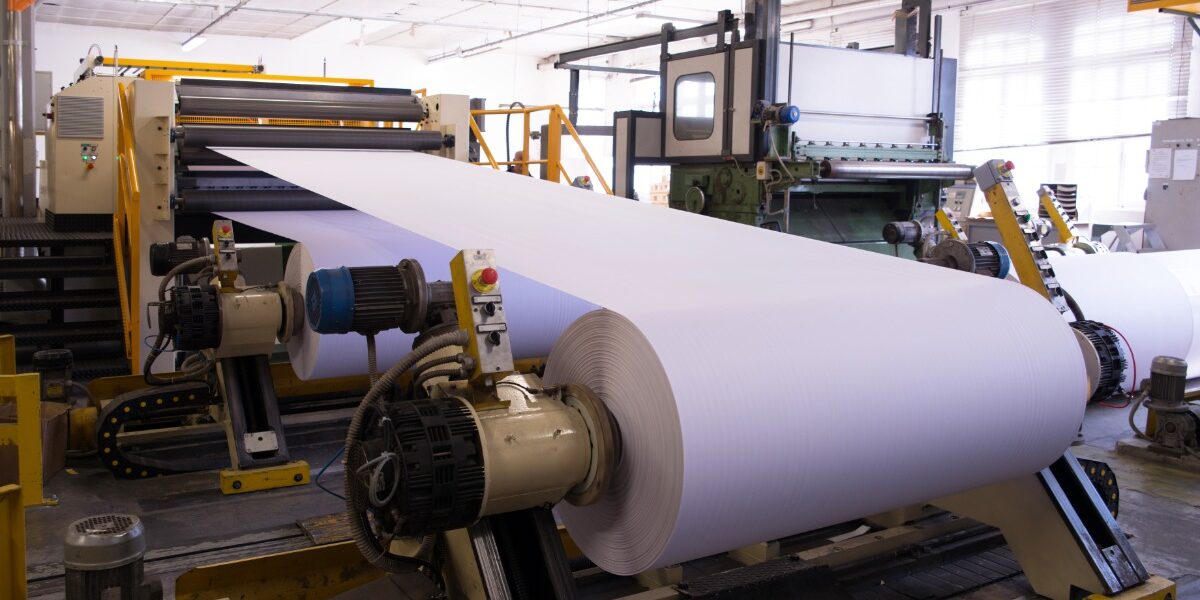
The key advantages of amino resins in paper treatment stem from their ability to modify how paper performs under demanding conditions. These thermosetting materials can support wet strength, dimensional stability, and surface durability when selected for an appropriate paper grade. Their value depends on resin chemistry, application method, curing conditions, and the performance requirements of the finished product.
Improved Wet Strength
Paper fibers naturally lose much of their bonding strength when exposed to water. Certain amino-resin systems, particularly melamine-formaldehyde and urea-formaldehyde formulations, can create durable bonds within a treated sheet after curing.
This can help paper maintain integrity during brief moisture exposure or wet processing. The degree of improvement varies with formulation, resin retention, and processing conditions.
Greater Dimensional Stability
Changes in humidity can cause paper fibers to swell, shrink, or distort. Amino resins can help limit these changes by reinforcing the fiber network or contributing to a cured surface layer.
More consistent dimensions can be valuable for specialty papers used in laminates, industrial converting, and applications requiring reliable fit. Manufacturers still need to assess how the treatment interacts with fiber composition and environmental conditions.
Enhanced Surface Performance
In selected coating and impregnation systems, amino resins contribute hardness and resistance to abrasion after appropriate curing. These properties can help treated paper withstand handling, converting, or contact with other materials.
Resin choice also influences flexibility and brittleness, so increasing hardness is not always the primary goal. Balancing surface durability with the intended end use is essential.
Processing and Formulation Flexibility
Amino resins are available in different chemistries and formulation approaches, allowing producers to tailor performance to a specific paper application. A urea formaldehyde resin manufacturer may collaborate with customers to evaluate resin characteristics such as solids content, viscosity, and curing behavior.
These variables influence how a resin is introduced into a paper process and how consistently it performs. Pilot evaluations and product testing help establish whether a proposed treatment meets operational requirements. A well-designed trial can compare treated and untreated samples under the same conditions, making changes in strength and handling easier to interpret.
Performance Depends on Proper Evaluation
The benefits of treating paper with amino resins are most meaningful when measured against defined specifications rather than assumed across every paper grade. Strength retention, moisture response, surface properties, and downstream converting behavior may all require testing.
Process teams should also review applicable handling guidance, exposure controls, and product requirements for the selected chemistry. No resin should be treated as universally suitable for every application.
Choosing the Right Manufacturing Partner
Successful paper treatment begins with a clear understanding of the substrate, target properties, and production constraints. Working with a technically capable chemical manufacturing partner can support formulation discussions, laboratory evaluation, and scale-up planning. Capital Resin Corporation collaborates with industrial customers on custom chemical production and development needs. Discussing performance targets early can help determine whether an amino-resin approach fits the application and what validation is needed before implementation.